An honest Mintlify review for 2026 covering pricing, security, pros, cons, and how it compares to modern alternatives.
Mintlify is one of the most polished documentation products on the market right now. That’s not flattery, it’s just where they’ve landed after years of sharp product work and a clear point of view on what developer docs should look and feel like.
But polished doesn’t mean perfect, and premium doesn’t mean right for everyone.
This is a straightforward review of where Mintlify stands in 2026, covering what it does well, what’s changed, where it struggles, and whether the pricing makes sense for your team. If you’re evaluating Mintlify or trying to decide if it’s time to switch, this should help you think it through.
TL;DR: our verdict on Mintlify in 2026
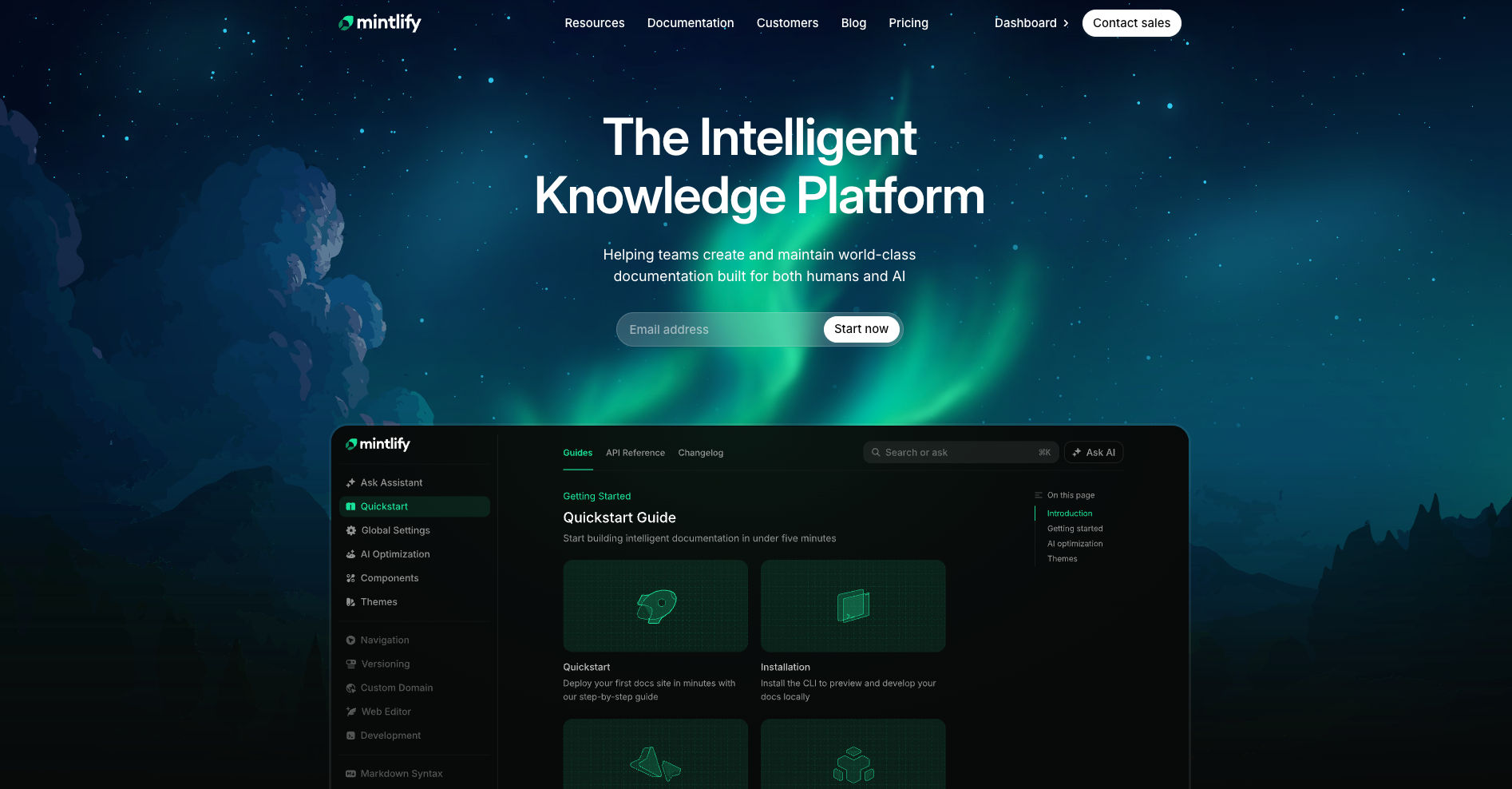
Mintlify is still an excellent documentation platform for the right team. The design is best-in-class, the developer experience is tight, and the AI-native direction gives it a modern edge that most competitors haven’t matched yet.
It’s best suited for API-first SaaS companies, devtools startups, and engineering-led teams that want polished docs live fast without building everything from scratch.
That said, Mintlify’s pricing is hard to justify for what you actually get, especially at the growth tier and beyond.
For teams that want a similar level of quality and modern workflow without the premium price tag, Velu delivers comparable value at a fraction of the cost. If budget is part of your decision, read on before you commit.
What’s new with Mintlify in 2026
Mintlify hasn’t been sitting still. Over the last six months, the product has shipped several updates that show where the company is heading, and it’s clearly moving beyond basic docs publishing into something more platform-like.
1. Workflow templates in the dashboard
Mintlify now ships pre-built workflow templates that let teams automate common documentation tasks directly from the dashboard. These cover changelog generation, API docs sync, feature documentation drafts, broken link detection, SEO audits, and more. Each template comes with optimized prompts and trigger configurations, so you’re not building workflows from scratch every time. This is a meaningful quality-of-life improvement for teams that want to keep docs maintained without constant manual effort.
2. Auto-generated docs from public GitHub repos
This is one of the more interesting recent moves. Mintlify can now auto-generate a complete documentation site from any public GitHub repository. You just replace github.com with mintlify.com in any public repo URL and you get an instant docs preview. If you own the repo, you can claim the site, add it to your Mintlify organization, and customize it from there. It’s a smart growth play that also lowers the barrier for open-source projects to get decent docs up fast.
3. skill.md for AI agents
Mintlify documentation sites now auto-generate a skill.md file based on your API references, guides, and features. The idea is to give AI agents a structured skills file with full context on how to help people use your product. This replaces the earlier install.md approach with a more structured format that’s seeing wider adoption. If you want more control, you can drop a custom skills.md file at the root of your docs repo to override the auto-generated version. It’s a clear signal that Mintlify is building docs not just for human readers but for the AI systems that increasingly interact with them.
4. Web editor improvements
Mintlify has been investing in its web editor, making it easier for non-technical contributors to work with docs without touching Git or markdown directly. This is a notable shift. Mintlify built its reputation on a docs-as-code workflow that engineers love, but these editor improvements suggest the company is expanding its audience. It’s starting to move toward the more accessible, GitBook-style editing experience that non-technical teams expect.
Whether this dilutes the developer-first identity or broadens it into something more versatile is worth watching.
What Mintlify does really well
1. Beautiful documentation out of the box
Mintlify’s biggest strength is presentation. Clean typography, thoughtful spacing, polished components. Your docs look like a well-funded startup designed them, even if you spent thirty minutes on setup. For teams where documentation is the first technical touchpoint with developers, this matters.
2. Fast setup for modern software teams
You’re not spending weeks configuring a static site generator or stitching together search and navigation. Mintlify handles the infrastructure so you can focus on content. Especially valuable for startups shipping docs alongside a product launch.
3. Excellent fit for API documentation
The API reference layout is clean, well-structured, and designed for how developers actually read endpoint docs. This is one of the clearest reasons technical teams shortlist Mintlify. The API docs experience isn’t an afterthought here, it’s a core strength.
4. Strong docs-as-code workflow
Docs live in Git, changes go through pull requests, and versioning happens naturally inside your existing development workflow. If your team already thinks in commits and PRs, Mintlify leans into that rather than asking you to change.
5. Modern AI-native positioning
Mintlify is position as AI-native documentation platform. The built-in assistant, AI-powered search, auto-generated skill.md files for AI agents, and support for standards like llms.txt and MCP show that the platform is thinking about docs that serve both humans and AI systems. Whether that matters to you today or not, it signals forward momentum that most competitors haven’t matched.
6. Premium brand perception
Mintlify has built a brand that developers admire. It shows up in “what should I use for docs” conversations with default credibility, earned through consistent product quality and smart positioning. But perception isn’t the same as fit, and that’s where things get more nuanced.
Pitfalls to watch when you pick Mintlify
1. Pricing feels steep for many teams
This is the most common criticism you’ll find in public discussions, from Reddit threads to Hacker News comments to founder communities. Mintlify is priced as a premium product, and for many teams, especially early-stage startups and lean engineering orgs, that premium feels hard to justify for a docs platform.
The product is good. But “good” and “worth the spend” are two different conversations, and a lot of teams land on the wrong side of that equation when the invoice hits.
2. AI usage costs feel unpredictable
Beyond the base subscription, the AI-related costs introduce a layer of uncertainty that makes budgeting uncomfortable. Assistant usage limits, potential overages, and the difficulty of forecasting how much AI usage your public-facing docs will generate are real concerns for teams trying to plan spend.
When your docs are public and traffic is unpredictable, an AI cost model that scales with usage can feel like a risk rather than a feature.
3. API playground reliability has faced criticism
The interactive API playground is one of Mintlify’s headline features, and on paper it’s a strong differentiator. In practice, some users have reported issues with example accuracy, reliability, and general usability.
This matters because the playground is often part of the pitch when teams evaluate Mintlify. When a headline feature doesn’t consistently deliver, it shakes confidence in ways that go beyond the feature itself.
4. GitHub permission scope raises concerns
During setup, Mintlify requests repository access that some users have described as broader than expected. For security-conscious teams, and that’s most serious engineering orgs, this becomes a real friction point in the evaluation.
It’s not that the permissions are necessarily unreasonable. It’s that when a docs tool asks for wide repo access, it invites scrutiny, and that scrutiny can slow down or kill a buying decision.
5. Not ideal for every documentation team
Mintlify is built for engineering-led workflows. If your docs team is primarily writers, content strategists, or non-technical contributors, the experience can feel less natural. The recent web editor improvements show that Mintlify is aware of this gap, but it’s still early days for that side of the product.
Security and trust
Let’s talk about the elephant in the room.
In 2024, Mintlify experienced a security incident that exposed customer tokens. For a documentation platform that connects to GitHub repos and handles sensitive integration data, this was a serious event. Not because of the scale, but because of what it revealed about the trust surface area these tools carry.
Mintlify responded, addressed the vulnerability, and communicated about the fix. That’s worth acknowledging. They didn’t hide from it, and the product has continued to operate without further public incidents since.
Is Mintlify pricing justified?
Mintlify uses a tiered pricing model with a free option for basic use, then paid tiers for startups, growing teams, and enterprise. The growth tier sits at $250/month, which already puts it in premium territory for a docs platform. But the base subscription is only part of the cost.
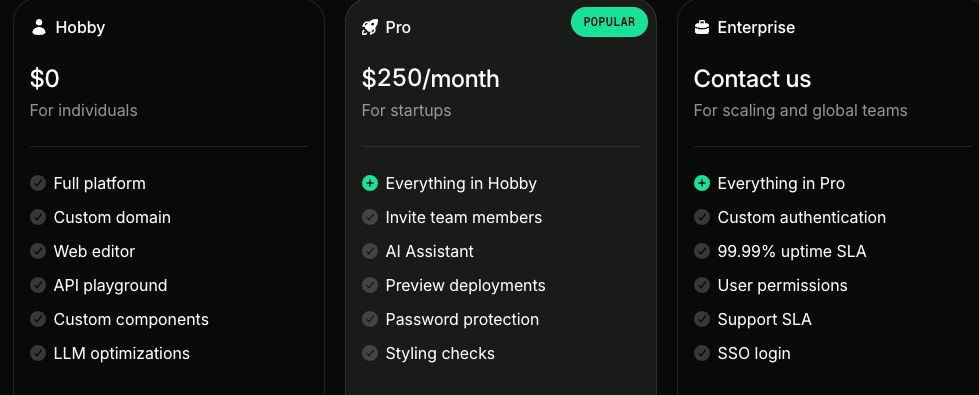
Each additional editor seat costs $20/month, which adds up quickly as your team grows. On the AI side, plans include 250 AI credits, and every credit beyond that is billed at $0.25 per overage. For teams with public-facing docs and unpredictable traffic, those overages can make monthly costs difficult to forecast. What looks like a $250/month plan on the pricing page can look quite different on the invoice.
What you’re paying for is real: hosted infrastructure you don’t have to maintain, a design layer that looks professional immediately, a docs-as-code workflow that works, and AI features that most competitors are still catching up on. If your docs directly impact developer onboarding, conversion, or retention, Mintlify can be a defensible investment.
But when you add up the subscription, the per-seat costs, and the AI overage risk, the total cost of ownership starts to feel heavy for what is ultimately a documentation platform. Much of what Mintlify offers, including good design, Git-based workflows, and AI search, is increasingly available elsewhere at significantly lower price points.
For most teams outside of well-funded API companies and devtools brands, the pricing is hard to defend.
Alternatives worth considering
If you’re evaluating Mintlify, here are the other tools that deserve a serious look.
1. Velu
Velu offers a comparable documentation experience to Mintlify, with modern design, AI-native features, and a solid publishing workflow, at a fraction of the price. The $49/month tier delivers what many teams would need Mintlify’s $250/month plan for, and one-command migration makes switching painless.
2. GitBook
Accessible and inclusive for non-technical teams, with collaborative editing that makes it easy for writers, PMs, and engineers to contribute in the same workspace.
3. ReadMe
Focused on API documentation and interactive developer onboarding experiences.
4. Docusaurus
Open-source and self-hosted with full control and zero recurring platform cost.
5. Fern
API-first with a focus on SDK generation alongside documentation.
6. Document360
A knowledge base platform rather than a documentation tool, best suited for teams that need to manage support content, internal guides, and customer-facing help centers.
Who is Mintlify actually best for?
Mintlify works best when a few things are true about your team:
- You’re building an API-first product or a developer tool where documentation quality directly affects adoption.
- Your docs team is engineering-led, or at least engineering-comfortable, with people who think in markdown and Git, not WYSIWYG editors.
- You’re willing to pay a premium for a hosted, polished experience rather than building and maintaining your own docs infrastructure.
- You don’t need deep customization or self-hosting control.
- You have the budget to absorb per-seat costs and potential AI overages without sweating the invoice.
If all of that describes your situation, Mintlify is a genuinely strong choice. It will save you time, make your docs look good, and keep your workflow clean.
If some of those don’t apply, if budget is tight, if your team isn’t technical, if you need more flexibility, the fit weakens and the alternatives listed above become more attractive.
Final verdict
Mintlify is still one of the best documentation platforms you can buy in 2026. The design quality, developer experience, and AI-native direction are real strengths that the team has earned through consistent, thoughtful product work.
But the documentation space has gotten more competitive, and Mintlify’s premium positioning means it has to justify that premium every quarter. For well-resourced API companies and devtools brands, it does. For everyone else, the calculus is less clear, especially when the market now offers modern, capable alternatives at much friendlier price points.
The right way to think about Mintlify in 2026: still excellent, but no longer the only serious option.